


When an Emergency Sewer Backup in Avondale Strikes: What to Do Right Now
An emergency sewer backup in Avondale can turn a normal evening into a costly, stressful disaster within minutes. Raw sewage entering your home is not just a plumbing problem, it’s a health hazard that demands immediate action.
Here’s what to do right now if you have a sewer backup:
- Stop using all water, toilets, sinks, showers, washing machine
- Shut off the main water valve at your meter box
- Turn off electricity to any rooms with standing water
- Evacuate people and pets from the affected area
- Do not touch the sewage water, it contains harmful bacteria and pathogens
- Call a licensed emergency plumber, response should happen within 60 minutes
- Document the damage with photos before cleanup begins
Sewer backups affect roughly 1 in 5 U.S. homes at some point. In Avondale, Chicago, aging clay pipes and mature tree roots make the risk even higher. A backup that goes untreated for even a few hours can mean thousands of dollars in structural damage, and serious health risks for your family.
At Baethke Plumbing, our team has spent more than 30 years helping Chicago homeowners resolve emergency sewer backups in Avondale and throughout the greater metro area. In this guide, we’ll walk you through exactly what to do, step by step, so you can protect your home and your family from the moment sewage appears.
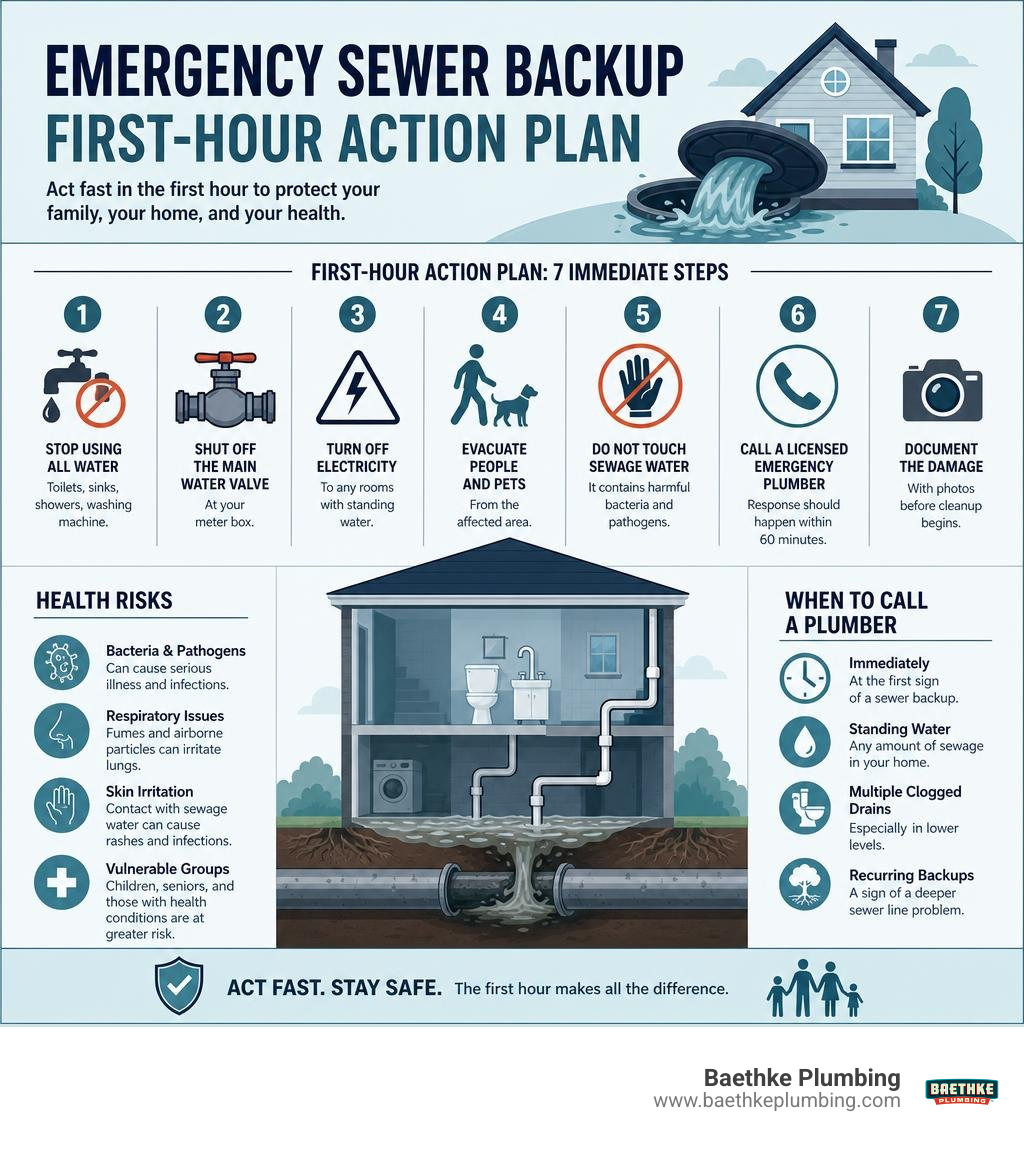
Emergency Sewer Backup Avondale: Immediate Steps to Take
When raw sewage begins bubbling up through your basement floor drain or lower-level fixtures, panic is a natural reaction. However, the actions you take in the first 60 minutes are critical to minimizing property damage and keeping your family safe.
As a trusted family-owned business serving Chicago since the late 20th century, Baethke Plumbing has seen how a swift, organized response can save homeowners thousands of dollars in restoration costs. For fast, professional intervention, you can access our Chicago emergency plumbing services round-the-clock.
Step 1: Cut Off the Water and Power
The very first thing you must do is eliminate any additional water entering your drainage system.
- Turn off the water: Locate your home’s main water shutoff valve, usually located in the basement near the street-side wall or utility closet, and turn it completely clockwise. If you cannot find it, instruct everyone in the house to stop flushing toilets, running faucets, or operating the washing machine and dishwasher. Any water you pour down the drain will have nowhere to go but back up into your living spaces.
- Address electrical hazards: Water and electricity are a deadly combination. If the sewage backup has reached an area with electrical outlets, appliances, or extension cords, do not step into the water. Locate your home’s main circuit breaker panel and safely shut off the power to the affected zones. If the breaker box is located in a flooded basement, do not attempt to reach it yourself, call an emergency plumber or your utility provider immediately.
Step 2: Evacuate and Contain the Area
Raw sewage is classified as Category 3 “black water,” meaning it is highly contaminated with pathogens, bacteria, and viruses.
- Keep everyone away: Ensure children, elderly family members, and pets are completely evacuated from the lower levels or any rooms experiencing a backup.
- Close off the space: Close doors to the affected rooms to limit the spread of airborne pathogens and foul sewer gas odors. If you must enter the area briefly, wear personal protective equipment, PPE, including rubber boots, heavy-duty gloves, and a protective face mask.
Step 3: Document the Damage for Insurance
Before any cleanup or remediation begins, you must document the scene thoroughly. This step is vital for your future insurance claims.
- Take photos and videos: Capture high-resolution images of the standing water, the point of origin, such as a floor drain or toilet, and any damaged personal property, walls, or flooring.
- Keep a log: Note the exact time the backup started and write down a list of impacted items. Having this clear photographic evidence will make the claims process much smoother when you speak with your insurance adjuster.
Warning Signs and Common Causes of Sewer Failures in Chicago
Sewer backups rarely happen completely out of the blue. Your plumbing system usually drops hints before a full-blown emergency occurs. Recognizing these warning signs early can help you schedule preventative repairs before dirty water ruins your basement.
Recognizing the Warning Signs of a Main Line Clog
If you notice any of the following symptoms, you are likely dealing with a main sewer line blockage rather than a simple fixture clog:
- Multiple slow drains: If your kitchen sink, bathtub, and laundry line are all draining slowly at the same time, the restriction is deep in the main line.
- Gurgling toilets: When you run water in the bathroom sink or your washing machine drains, do you hear a wet, bubbling, or gurgling sound coming from your toilets? This happens because trapped air is forced up through the toilet trap.
- Sewage odors: A persistent smell of rotten eggs or sewer gas near your floor drains or yard is a clear sign that wastewater is pooling instead of flowing to the municipal system.
- Strange fixture interactions: Flushing a toilet shouldn’t cause water to back up into your shower, and running your washing machine shouldn’t make your basement floor drain overflow. If you see these bizarre occurrences, shut off your water and call for help.
Why an Emergency Sewer Backup Avondale Requires Professional Mitigation
Trying to clear a main sewer line backup with store-bought chemical drain cleaners is a recipe for disaster. These harsh chemicals rarely dissolve heavy obstructions like tree roots or grease, and they can actually eat away at older metal and clay pipes, worsening the damage.
Furthermore, untreated sewage presents severe health risks, including exposure to E. coli, Salmonella, and Hepatitis A. Professional plumbers use specialized protective gear and industrial-strength diagnostic equipment to safely clear the line, sanitize the area, and identify when the situation needs urgent help from a licensed team, as explained in our blog on when to call an emergency plumber in Avondale, Chicago. Prompt sewer repair protects both your family’s health and your home’s foundation.
Tree Root Intrusion in Aging Clay Pipes
In older Chicago neighborhoods like Avondale, Logan Square, and Edison Park, many residential sewer lines are constructed of clay tile pipe. While clay is highly durable against corrosion, the joints between the pipe sections are vulnerable.
Over decades, the moisture and nutrients flowing through your sewer line act as a beacon for mature trees. Tiny root tendrils slip through small gaps in the clay joints, expanding over time until they crack the pipe and create a dense, hairy mass that catches hair, grease, and toilet paper. If your property has mature trees or older clay lines, our sewer line repair solutions can help address the root cause permanently.
Professional Diagnostic and Repair Solutions
Once our licensed plumbers arrive at your Avondale home, we don’t guess at what is causing your sewer backup. We use advanced diagnostic tools to locate the exact source of the problem and recommend the most efficient, cost-effective repair method.
| Method | Best For | How It Works | Expected Longevity |
|---|---|---|---|
| Traditional Snaking (Mechanical Auger) | Soft blockages, temporary root relief | A steel cable with a cutting head rotates through the pipe to punch a hole through clogs. | Short-term, clogs may return if pipe walls aren’t cleaned |
| Hydro Jetting | Heavy grease, mineral scale, extensive root intrusion | Ultra-high-pressure water blasts away debris, restoring the pipe’s full diameter. | Long-term, cleans pipe down to the original surface |
| Trenchless Sewer Repair (Pipe Lining) | Cracked, leaking, or root-damaged pipes | A flexible epoxy-infused liner is inserted into the old pipe and cured, creating a seamless “pipe-within-a-pipe.” | 50+ years, avoids major lawn excavation |
Sewer Video Camera Inspections
Gone are the days of blindly digging up your beautiful yard to find a broken pipe. We perform high-definition sewer video camera inspections by inserting a waterproof camera attached to a flexible push-rod down your cleanout. This provides our technicians with real-time, high-contrast footage of the interior of your sewer line. We can pinpoint cracks, misaligned joints, sagging sections, or root blockages with absolute precision, allowing us to explain your repair options clearly before any work begins.
Hydro Jetting vs. Mechanical Snaking
While a standard plumbing snake is excellent for punching a quick hole through a toilet clog, it often leaves grease, scale, and fine tree roots behind. For a comprehensive clean, we recommend hydro jetting. This process utilizes specialized nozzles that blast water at extreme pressures to scrub the inner walls of your pipes clean. If you are comparing the two methods, our blog on drain snake vs. hydro jetting explains when each option makes sense for Chicago homes. It essentially descales the line, washing away years of grease buildup and slicing through stubborn root systems without damaging the underlying pipe structure. When a backup points to a deeper main-line issue, our sewer line repair services help restore reliable flow and reduce the risk of repeat emergencies.
Frequently Asked Questions about Sewer Backups in Chicago
What is the difference between a drain clog and a main sewer line backup?
A standard drain clog is isolated to a single fixture. For example, if only your kitchen sink is draining slowly but your toilets and showers work perfectly, the blockage is located in that specific sink’s trap or branch line.
A main sewer line backup occurs when the primary pipe connecting your home to the city’s municipal sewer main is blocked. In this scenario, wastewater cannot escape your property, causing backups across multiple lower-level drains simultaneously.
Does homeowners insurance cover sewage backup cleanup?
A standard homeowners insurance policy typically does not cover sewage backups unless you have specifically added a “Sewer Backup and Sump Pump Overflow” rider to your coverage. This optional endorsement is highly recommended for Chicago residents, especially in areas prone to heavy storm surges or with older infrastructure. If you experience a backup, ensure you document all damage immediately and call your insurance provider to confirm your policy details.
Preventing an Emergency Sewer Backup Avondale in the Future
The best way to handle a sewer emergency is to prevent it from ever happening. Here are a few highly effective preventative measures:
- Install a backwater valve: This mechanical valve allows wastewater to flow out of your home but automatically seals shut if sewage begins flowing backward from the municipal main during heavy rains.
- Schedule regular maintenance: If your home has mature trees or clay pipes, have your main line professionally cleaned and inspected every 18 to 24 months.
- Practice smart drain care: Never flush “flushable” wipes, paper towels, feminine hygiene products, or dental floss down the toilet. In the kitchen, avoid pouring cooking grease, oils, or fibrous food scraps down the garbage disposal.
- Improve yard drainage: Ensure your gutters and downspouts route rainwater far away from your foundation so stormwater is less likely to overwhelm vulnerable drainage areas.
Conclusion
An emergency sewer backup in Avondale is a stressful event, but knowing how to act in the first hour can make all the difference. By shutting off your water, keeping your family safe from biohazards, and calling in licensed professionals, you can protect your property from long-term damage.
At Baethke Plumbing, we bring more than 30 years of local Chicago expertise, fully licensed professionals, and customer-first service to every single job. We take pride in helping your home return to a safe, clean, and comfortable condition as quickly as possible. If you are dealing with a sewer issue or want to prevent future disasters, contact our professional sewer backup technicians for help from our friendly, experienced team.


