


What to Do When Your Sump Pump Is Not Working
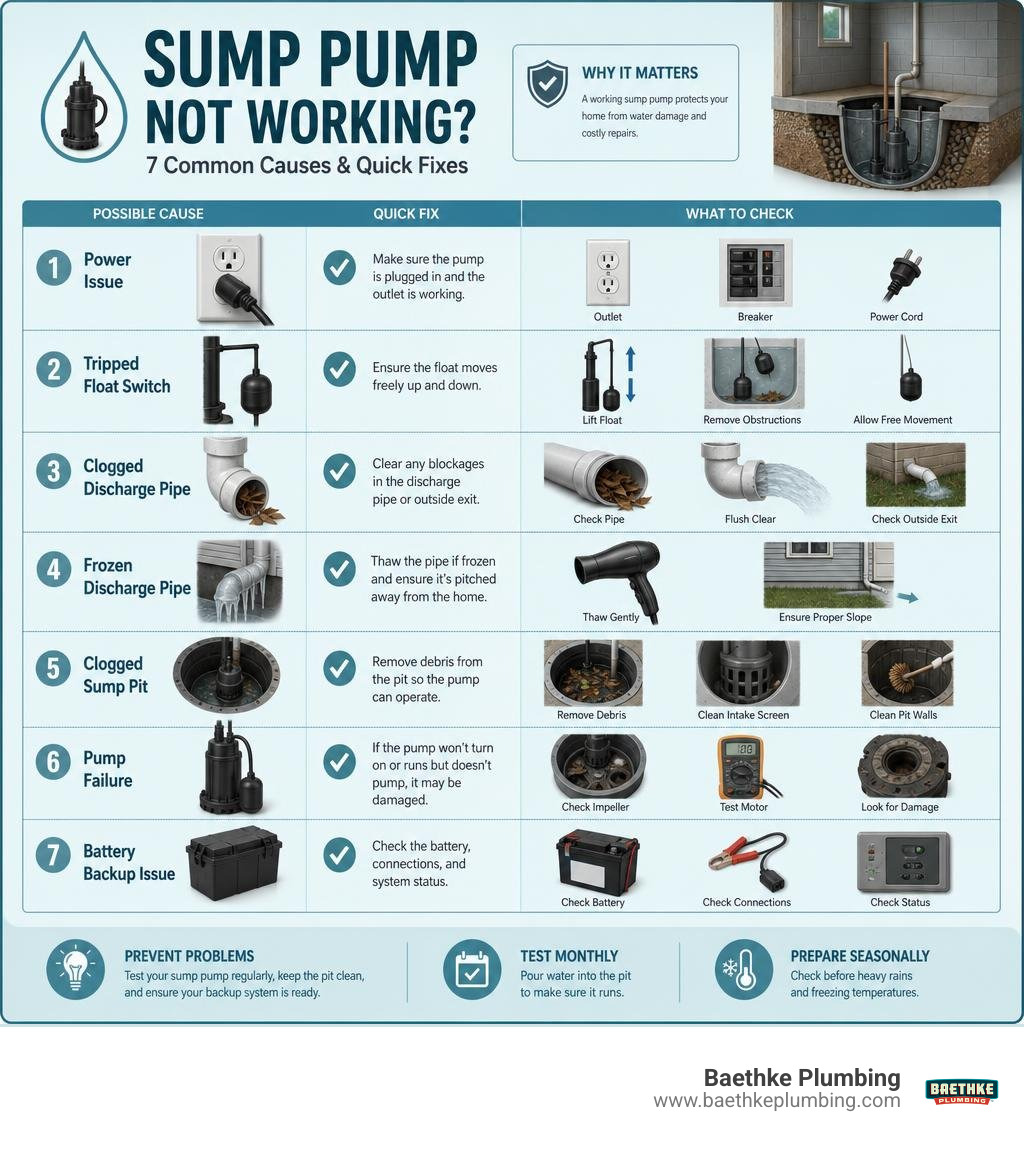
If your sump pump not working is the problem you’re facing right now, here’s a quick look at the most common causes and what to do:
| Cause | Quick Fix |
|---|---|
| No power | Check the outlet, reset the GFCI, check the circuit breaker |
| Stuck float switch | Clear debris, manually lift the float to test |
| Clogged intake or impeller | Unplug pump, remove and clear debris from screen |
| Frozen or blocked discharge pipe | Inspect outside line, clear ice or debris |
| Wrong pump size | Consult a plumber about upgrading |
| Broken check valve | Inspect and replace if cracked or stuck |
| Old or burned-out motor | Replace the pump if it’s 7–10+ years old |
A sump pump not working during a heavy storm is one of the fastest ways to end up with a flooded basement and serious water damage to your home’s foundation, floors, and belongings. The good news? Most failures come down to a handful of well-known causes, and many can be fixed without calling a professional.
Most sump pumps last 7 to 10 years with regular maintenance. Pumps that run frequently may only last 5 to 7 years. Knowing why they fail, and the warning signs to watch for, can save you thousands in water damage repairs.
At Baethke Plumbing in Chicago, our team has spent decades diagnosing and repairing sump pump not working problems across homes in the Greater Chicago area. In this guide, we’ll walk you through the most common causes of failure, simple step-by-step fixes, and when it’s time to call a pro.
How a Sump Pump Protects Your Home
To understand why a malfunctioning pump is such a plumbing emergency, it helps to understand how the system is designed to keep your basement dry. Your home’s foundation is constantly under pressure from groundwater. During heavy rains or rapid snowmelt, the water table rises, pressing against your foundation walls and floor.
This is where the system comes in. A perimeter drain, often called drain tile, is installed around the foundation to collect groundwater and channel it safely into a basin dug into your basement floor. The pump sits inside this basin, ready to push water out and away from your home. When the system fails, that natural water pressure has nowhere to go but up through cracks in your concrete floor. You can read more about this protective shield in our guide on how to protect your home with a sump pump.
Understanding the Sump Basin and Pump Mechanics
The system relies on a few simple mechanical components working in harmony. The sump pit, or basin, acts as the collection point. Inside the basin, you will typically find one of two primary pump styles:
- Submersible Pump: This unit sits completely underwater at the bottom of the basin. It is quieter, generally more powerful, and less likely to clog because the motor is sealed inside a heavy cast-iron housing.
- Pedestal Pump: This unit features a motor mounted on a shaft above the basin, keeping it out of the water. While easier to service, they are louder and more prone to tipping.
At the heart of either pump is the impeller, a small spinning fan-like component that forces water up through the discharge pipe and away from your home. Understanding these components is the first step to diagnosing problems, which we cover in detail in our article: All About Sump Pumps.
Sump Pump Not Working? 7 Common Causes of Failure
When we receive emergency calls from homeowners in neighborhoods like Lincoln Square, North Center, or Bucktown, the culprit is almost always one of seven common issues.
Let’s break down these common points of failure so you can troubleshoot your system systematically.
1. Power Outages and Electrical Issues
Sump pumps run on electricity, which means they are completely vulnerable to power failures. Ironically, the severe storms that cause basement flooding are the exact same storms that knock out the power grid.
However, electrical issues aren’t always caused by a neighborhood blackout. Often, the problem lies within your home’s electrical system:
- Tripped GFCI Outlet: Sump pumps must be plugged into a Ground Fault Circuit Interrupter (GFCI) outlet to prevent electrical shock. Because basements are naturally damp, these highly sensitive outlets can trip, cutting off power to the pump.
- Overloaded Circuit Breaker: A high-powered pump drawing 3 to 6 amps can easily trip a circuit breaker if it shares a line with other heavy appliances like a washing machine or freezer. Your pump should always run on a dedicated circuit.
- Extension Cord Voltage Drops: Using extension cords is a major cause of premature motor failure. Extension cords cause voltage drops that overheat the motor, causing it to shut down or burn out. Always plug your pump directly into a dedicated wall outlet.
2. Stuck or Malfunctioning Float Switch
The float switch is the unsung hero of your system. It acts as the mechanical “trigger” that tells the pump when to turn on and off. As water rises in the basin, the float rises. Once it reaches a pre-set level, it completes the electrical circuit and starts the motor.
There are two main types of switches:
- Tethered Float: A floating bulb attached to a cord.
- Vertical Float: A plastic cylinder that slides up and down on a metal rod.
The most common issue is a physically stuck float. Over time, vibrations from the running pump can cause the unit to shift inside the basin, pinning the float switch against the rough concrete or plastic wall of the pit. If the float can’t rise, the pump won’t turn on. If it gets stuck in the “up” position, the pump will run continuously until the motor burns out.
3. Clogged Intake Screen or Impeller
Your sump pit is not a clean environment. Dirt, silt, gravel, and laundry lint (if your washing machine drains nearby) constantly find their way into the basin.
If the basin is uncovered or hasn’t been cleaned in years, this debris settles to the bottom, forming a thick mud. The pump draws water from the very bottom of the pit, meaning it will eventually suck up this debris.
- Intake Screen Blockage: The screen on the bottom of the pump can become completely caked in mud, starving the pump of water.
- Impeller Jams: Small pebbles or debris can bypass the screen and jam the spinning impeller blades. When this happens, you will hear the motor hum, but no water will move.
4. Frozen or Blocked Discharge Pipes
Your pump can be working perfectly, but if the water has nowhere to go, your basement will still flood. The discharge pipe carries the water out of your basement and deposits it safely away from your foundation.
In cold climates like Chicago, frozen discharge lines are a major winter hazard. If the pipe is not pitched correctly, water will pool inside and freeze solid, creating an impenetrable ice block. During the spring thaw, heavy rains will fill the pit, but the pump will be unable to push water past the ice.
Additionally, leaves, twigs, and small rodents can crawl into the outdoor end of the pipe, creating stubborn physical blocks. To prevent yard pooling and backflow, local drainage upgrades can be a lifesaver to ensure water flows away from your foundation.
5. Incorrect Sump Pump Sizing or Installation
Not all homes require the same pump capacity. A small crawl space in Evanston might only need a modest 1/3 horsepower (HP) pump, while a deep basement in a high-water-table area of Albany Park or Jefferson Park might require a heavy-duty 1/2 HP or even 3/4 HP cast-iron unit.
- Undersized Pumps: If your pump is too weak, it can be overwhelmed during a severe storm. The water may rise faster than the pump can remove it.
- Oversized Pumps: A pump that is too powerful for the basin size will “short cycle,” turning on and off rapidly every few seconds. This constant starting and stopping puts heavy stress on the motor and electrical switch, which can lead to premature failure.
If you are wondering why your basement keeps taking on water despite having a working unit, read our deep dive: Pumps: Why Do So Many People Flood Even Though They Have Pumps?.
6. Broken or Missing Check Valve
The check valve is a small, one-way valve installed in the vertical discharge pipe just above the pump. Its job is simple: let water flow up and out, but prevent it from falling back down into the pit when the pump turns off.
If this valve is broken, missing, or installed backward:
- Every time the pump cycles off, several gallons of water in the vertical pipe will rush back down into the basin.
- This extra water immediately raises the float switch again, causing the pump to cycle back on.
- This constant loop of pumping the same water over and over again will wear out your pump in a matter of months.
7. Mechanical Wear and Motor Burnout
At the end of the day, a sump pump is a mechanical device with moving parts that are subject to wear and tear. Cheap plastic models sold at big-box hardware stores are prone to warping and early motor burnout under heavy loads.
High-quality cast-iron pumps dissipate heat much better, extending their operational lifespan. However, even the best motor will eventually fail due to age, worn bearings, or electrical shorts.
Signs Your Sump Pump Is Failing
You shouldn’t wait for a major storm to find out your sump pump not working is going to cost you a fortune. Your system will almost always give you warning signs before it quits completely.
- Strange Noises: If your pump sounds like a washing machine full of rocks, or if you hear loud rattling, squealing, or grinding, the bearings are likely shot or the impeller is damaged.
- Constant Running: A pump that never shuts off is a sign of a stuck float switch, a broken check valve, or an extremely high water table that is overwhelming the unit.
- Musty Odors and Mold: Standing water in a dirty basin can create a breeding ground for mold and mildew, sending a musty smell throughout your home.
- Visible Rust and Corrosion: If the pump housing is covered in heavy rust, the structural integrity of the seals is compromised, which can lead to electrical shorts.
Sump Pump Not Working: Warning Signs to Watch For
In addition to visual signs, keep an eye out for extreme vibrations. If the pump is rattling violently, it can shift inside the basin, disabling the float switch. Short cycling and standing water that never seems to drain completely are also clear indicators that your system is on its last legs.
To help you decide when it’s time to stop repairing and start replacing, read our guide on How to Tell When Your Sump Pump Needs to Be Replaced.
Sump Pump Maintenance and Prevention Tips
The absolute best way to handle a sump pump not working is to prevent it from failing in the first place. With a small amount of routine maintenance, you can keep your basement dry and extend the lifespan of your pump. We outline the core steps for homeowners in our guide, Ensure Home Safety: A Guide to Sump Pump Maintenance.
How to Test Your Sump Pump
We recommend testing your pump at least twice a year — once in the spring before the heavy rains start, and once in the fall.
- Inspect the Discharge Outlet: Go outside and ensure the discharge pipe is clear of leaves, dirt, or ice.
- The Water Test: Pour about 20 liters (5 gallons) of water directly into the sump pit.
- Observe the Cycle: Watch the float rise. The pump should turn on within 5 to 10 seconds of the float rising, pump the water out quickly, and shut off cleanly without cycling back on.
- Check the Power: If the pump doesn’t turn on, try unplugging the float switch piggyback plug and plugging the pump directly into the outlet to see if the motor runs.
For a complete step-by-step checklist, refer to The Complete Guide to Maintaining Your Sump Pump.
Preventive Maintenance Schedule
To keep your system running optimally, follow this basic schedule:
- Every 3 Months: If your pump handles laundry water or highly active groundwater, clean the inlet screen and check for debris.
- Annually: Unplug the pump, remove it from the pit, and thoroughly clean the basin of mud and silt. Check the check valve and inspect all electrical cords.
- Every 2 Years: Replace the float switch. Because it is the most common point of failure, proactively replacing it can prevent unexpected disasters.
What to Do in a Sump Pump Emergency
It’s pouring rain, and you look down into your basement only to see water slowly rising around your sump pit. What should you do?
Immediate Steps to Take During a Flood
If your basement is actively flooding, prioritize your safety:
- Safety First: Never walk into a flooded basement if the water has reached the level of electrical outlets, extension cords, or appliances. Turn off the power to your basement at the main breaker panel first.
- Unplug and Move: If it is safe to do so, unplug valuable electronics, move furniture, and lift carpets off the floor.
- Manual Water Removal: Use a wet/dry vacuum or buckets to manually remove water from the basement floor.
- Call a Professional: Contact an emergency plumbing service immediately. If you live in our service area, you can reach out to us at Baethke Plumbing for fast, reliable assistance.
Sump Pump Not Working During a Power Outage: Backup Solutions
If the power goes out, your primary pump is useless. To protect your home, you need a secondary backup system:
- Battery Backup Sump Pump: This is an entirely separate pump that sits in the basin alongside your primary unit. It runs on a dedicated heavy-duty marine battery. If the power goes out or the primary pump fails, the battery backup automatically takes over, providing 24 to 48 hours of emergency pumping power.
- Water-Powered Backup: These systems use your home’s municipal water pressure to create a vacuum that sucks water out of the pit. They require no electricity and can run indefinitely, but they require professional installation and municipal water service.
Does Homeowners Insurance Cover Sump Pump Failure?
A standard homeowners insurance policy does not typically cover water damage caused by a sump pump failure or sewer backup. To protect yourself, you must purchase an optional water backup endorsement (also known as sump pump overflow coverage). This coverage is relatively inexpensive and can save you tens of thousands of dollars in restoration costs if your basement floods.
Frequently Asked Questions About Sump Pump Repair
How long does a sump pump typically last?
Under normal operating conditions, a high-quality sump pump will last between 7 to 10 years. However, if your home has a high water table and the pump runs frequently, its lifespan will likely range from 5 to 7 years.
| Pump Usage | Expected Lifespan | Recommended Action |
|---|---|---|
| Light / Seasonal Use | 10+ Years | Test twice a year, clean basin annually |
| Average Use | 7 to 10 Years | Clean basin annually, replace switch every 2-3 years |
| Heavy / Continuous Use | 5 to 7 Years | Professional inspection annually, install backup system |
Should there always be water in my sump pit?
Yes, it is completely normal to have a small amount of standing water in the bottom of your sump pit. The pump is designed to turn on only when the water rises to a certain level. However, if the pit is completely dry for long periods or if the water level is constantly near the top of the pit without the pump turning on, you may have an issue.
When should I replace my sump pump instead of repairing it?
If your pump is over 7 years old, breaks down frequently, or has a burned-out motor, replacing the unit is almost always more cost-effective than attempting repairs. A new, reliable installation gives you peace of mind during the next big storm.
Conclusion
A sump pump not working is a stressful situation, but understanding the common causes and staying on top of routine maintenance can keep your basement dry and protect your home’s foundation.
For over 30 years, Baethke Plumbing has been the trusted name for residential and commercial plumbing services across Chicagoland, including neighborhoods like Ravenswood, Lincoln Park, Logan Square, and Forest Glen. We offer licensed professionals, straightforward pricing, and a customer-first approach.
Whether you need a routine maintenance check, a battery backup system installation, or emergency repairs, our team is ready to help. Contact our sump pump professionals to schedule an appointment for repair or one of our full range of residential plumbing services.