


Is Your Chicago Home’s Plumbing Sending You Warning Signs?
The most common signs you need re-piping in your home are:
- Frequent or recurring leaks — especially in multiple locations
- Rusty, brown, or discolored water — from both hot and cold taps
- Persistent low water pressure — affecting several fixtures at once
- Strange metallic taste or odor in your tap water
- Visible corrosion or rust on exposed pipes
- Banging or noisy pipes when water runs
- Unexplained spikes in your water bill
If two or more of these apply to your home, it’s time to get a professional assessment.
Chicago homes are built tough, but the plumbing inside them isn’t invincible. Many homes across the city still run on original galvanized steel, lead, or polybutylene pipes installed decades ago. These materials were never designed to last forever. And when they start to fail, they don’t always fail loudly.
More often, it’s a slow creep. A leak here. Brown water in the morning. A water bill that seems a little high. Most homeowners patch the problem and move on, not realizing they’re stuck in a cycle of temporary fixes while the real issue gets worse inside the walls.
Ignoring the warning signs doesn’t just mean more plumber visits. It can mean water damage, mold, contaminated drinking water, and a home that’s harder to sell.
After decades of inspecting and replacing plumbing systems throughout the Greater Chicago area, the team at Baethke Plumbing has seen how recognizing the signs you need re-piping early can save homeowners thousands of dollars and serious headaches. In this guide, we’ll walk you through exactly what to look for — and what to do about it.
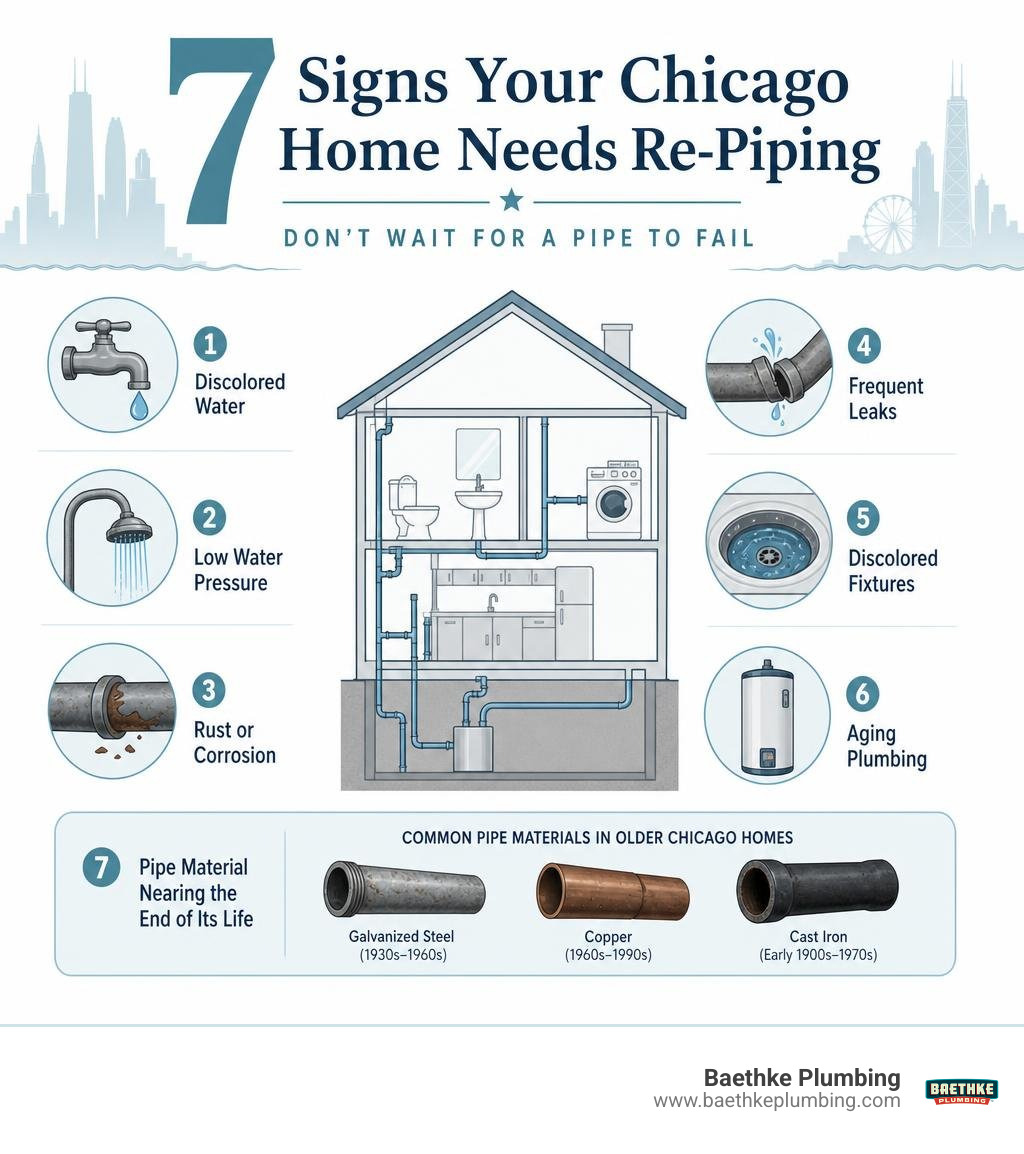
Understanding Your Home’s Plumbing Lifespan and Materials
To understand if your plumbing is failing, you first need to understand what your pipes are made of and how long they are designed to last. In historic Chicago neighborhoods like Lincoln Park, Logan Square, Ravenswood, and Oak Park, we regularly encounter homes built between the late 1800s and the mid-20th century. While these properties boast incredible architectural character, their plumbing systems are often ticking time bombs.
Knowing what is hiding behind your drywall is the first step to maintaining a safe home. If you aren’t sure what kind of pipes you have, our whole home plumbing inspection guide is an excellent resource to help you map out your system.
Outdated Materials and Immediate Red Flags
There are a few plumbing materials that we classify as immediate red flags. If your home contains any of the following, you should schedule a professional repiping evaluation as soon as possible:
- Lead Pipes: Commonly used for water service lines in Chicago homes built before the mid-1980s. Lead is a highly toxic heavy metal that can leach into your drinking water, posing severe developmental and neurological risks, particularly to children. To learn more about how we address this local issue, read our guide: Combatting Chicago’s Lead Poisoning Problem with Quality Repiping.
- Galvanized Steel: Standard in homes built before the 1960s. These pipes are coated in zinc to prevent rust, but over decades, that coating wears away. The pipes then corrode from the inside out, restricting water flow and releasing rust into your water supply.
- Polybutylene (Quest): A flexible gray plastic piping used heavily from the late 1970s through the 1990s. Polybutylene reacts poorly to the chlorine and oxidants found in municipal water supplies, causing the material to become brittle and flake from the inside until it suddenly bursts. It is no longer accepted by U.S. building codes.
Lifespan of Common Pipe Materials
Even high-quality materials have a finite lifespan. In our years of experience, we have documented how different materials hold up under local water conditions. To dive deeper into what fails first in our local properties, check out: Chicago Homes Aging Plumbing: What Fails First.
Here is what you can generally expect from common plumbing materials:
- Brass: 40 to 70 years
- Copper: Up to 50 years (though high water hardness can shorten this window)
- Galvanized Steel: 20 to 50 years
- Polybutylene: 10 to 25 years
- Cast Iron (Drain lines): 50 to 100 years
- PVC / CPVC: 25 to 40 years
If your home is approaching or has passed these age limits, it is highly likely that the plumbing is deteriorating, even if you haven’t experienced a catastrophic blowout yet.
7 Signs You Need Re-Piping in Your Chicago Home
Recognizing the early warning signs of systemic pipe failure can be the difference between a controlled, scheduled upgrade and an emergency flooding disaster. According to national industry insights, physical symptoms of plumbing decay are highly predictable.
If you notice any of these seven issues in your home, it may be time to review the signs you need to call a professional Chicago plumber and discuss whether whole-house repiping makes sense.
1. Frequent and Recurring Leaks
If you find yourself on a first-name basis with your local plumber because you are constantly patching leaks, your system is trying to tell you something.
A single isolated leak under a kitchen sink is usually a minor issue. However, when you experience pinhole leaks popping up in different rooms or on different floors, it means the pipe material itself is structurally degrading. Patching a single spot in a failing pipe actually increases the water pressure on the remaining weakened sections, often triggering another leak nearby. This is known as the “Band-Aid effect,” and it can quickly lead to widespread water damage, rotting drywall, and toxic mold growth inside your walls.
2. Rusty or Discolored Water
When you turn on your tap after a weekend away, does the water run brown, red, or yellow for a few seconds before clearing up? This is a classic sign of internal pipe corrosion.
As galvanized steel or iron pipes age, rust and iron oxide scale build up inside them. When the water sits stagnant overnight, it absorbs these rust particles.
- How to test: If the discolored water comes from both your hot and cold taps, the issue is almost certainly your piping. If it only occurs when running hot water, the culprit is likely a failing water heater.
3. Persistent Low Water Pressure
If your shower head has gone from a refreshing spray to a sad, weak trickle, you might blame the municipal water supply. But if the low pressure is affecting multiple fixtures across your home, the problem is inside your walls.
As galvanized pipes corrode, the rust doesn’t just flake off; it builds up inside the pipe, narrowing the internal diameter. A pipe that started with a 1-inch opening can easily restrict to a half-inch or less over 40+ years of mineral scale accumulation. This choking of your water lines permanently chokes your water pressure.
4. Strange Tastes or Odors in Tap Water
Your drinking water should be clean, clear, and completely odorless. If you notice a persistent metallic taste, a musty odor, or a sewage-like smell when you run the tap, your pipes are decaying.
As the internal lining of old metal pipes breaks down, it releases microscopic metal shavings and mineral deposits directly into your drinking water. Beyond tasting terrible, this can indicate that chemical contamination or bacterial growth is occurring inside your aging plumbing infrastructure.
5. Visible Corrosion on Exposed Pipes
You don’t have to guess what condition your pipes are in if you have exposed plumbing in your basement, crawl space, or utility room. Take a walk downstairs with a flashlight and inspect the lines.
Look for:
- Flaking, dimpling, or peeling metal
- Greenish-blue powdery deposits on copper pipes (indicating oxidation)
- White, crusty salt-like buildup around joints and fittings
- Rust spots or damp patches on the exterior of the metal
If the pipes you can see are corroding, the pipes hidden behind your walls are in the exact same condition.
6. Noisy or Banging Pipes
Plumbing systems should operate relatively quietly. If you hear loud banging, rattling, or “shuddering” noises when you turn off a faucet, you are experiencing water hammer.
Water hammer occurs when fast-closing valves abruptly stop the flow of water, sending a shockwave back through the system. In older plumbing, this shockwave causes loose, corroded, or poorly secured pipes to thrash against wall studs. Over time, these violent pressure surges weaken joints and cause sudden, catastrophic pipe bursts.
7. Unexplained Spikes in Water Bills
Have your water bills jumped by 20% to 30% over the last few months, even though your household habits haven’t changed? You likely have a hidden leak.
Water can escape silently from pipes running through crawl spaces, behind walls, or beneath your home’s concrete foundation (known as a slab leak). If you aren’t sure if you have a hidden leak, turn off all water-using appliances in your home and check your water meter. If the meter’s dial is still spinning, water is escaping somewhere in your system.
Repair vs. Repipe: When to Choose Whole-House Replacement
When faced with a failing plumbing system, homeowners often ask: Can’t I just repair the leaks as they happen?
While spot repairs are highly effective for isolated issues in newer plumbing systems, they are economically irrational when dealing with systemic pipe failure. If you are constantly paying emergency plumber fees to patch old pipes, you are throwing good money after bad. Investing in a whole-house repipe is a long-term solution that protects your property value and eliminates recurring repair bills.
For a comprehensive look at your options, you can explore our repiping services.
Spotting the Signs You Need Re-Piping vs. Simple Repairs
How do you draw the line between a simple fix and a full replacement? We recommend using the “Rule of Two”: if you experience two or more pinhole leaks in different locations within a 12-month period, the material itself is structurally compromised.
If you suspect you have a leak but aren’t sure where it is, check out The Homeowner’s Guide to Leak Detection: Five Signs to Look For to help diagnose the issue before calling in the pros.
The Financial Trap of Repeated Spot Repairs
Consider the math: a single professional leak repair can cost several hundred dollars. If you have to do this two or three times a year, plus pay for drywall patching, paint, and potential mold remediation, you will quickly approach the cost of a full repipe without actually solving the underlying problem. A complete repipe stops the bleeding, secures your home’s structural integrity, and provides ultimate peace of mind.
The Modern Repiping Process and Recommended Materials
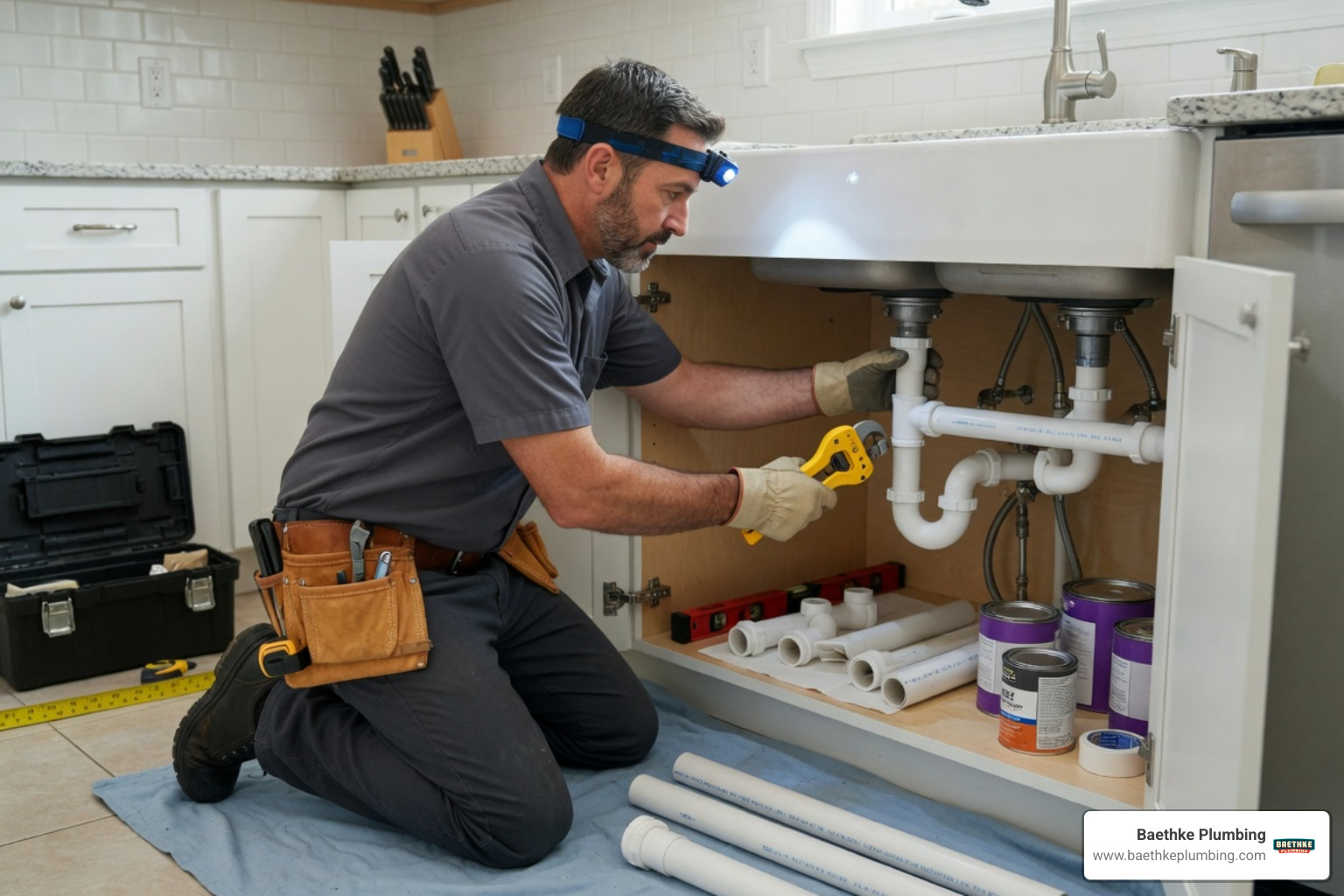
Many homeowners put off repiping because they picture their home being completely torn apart. Fortunately, modern repiping techniques are highly surgical. Instead of tearing down entire walls, we make small, strategic 4-inch circular access cuts to route flexible piping through existing framing bays.
How Material Choice Affects the Signs You Need Re-Piping
Choosing the right material for your new plumbing system is critical. Today, we primarily recommend CPVC or Copper for residential supply lines.
Here is how the top modern materials compare:
| Material | Expected Lifespan | Pros | Cons | Best For |
|---|---|---|---|---|
| Copper (L or M) | 50+ Years | Durable, naturally biostatic (resists bacteria), high resale value, fully recyclable | Expensive material, can burst if frozen, vulnerable to highly acidic water | Exposed basement runs, high-end historic restorations |
| CPVC | 25 – 40 Years | Corrosion-resistant, cheaper than copper, easy to install | Can become brittle over time, vulnerable to cracking | Budget-conscious projects |
What to Expect During the Repiping Timeline
A standard whole-house repipe for a 3-bedroom, 2-bathroom Chicago home typically takes 1 to 3 days to complete. Here is what the step-by-step process looks like:
- Preparation: We lay down drop cloths and plastic sheeting to protect your floors and furniture from dust.
- Rough-In: We make small access cuts in your drywall and run the new water lines parallel to or bypassing the old ones.
- The Switchover: We temporarily shut off your water (usually for 6 to 8 hours during the day) to disconnect the old lines and tie your fixtures into the brand-new system. Note: We always restore your water service at the end of the workday so you are never left without water overnight.
- Testing: We pressure-test the entire system to ensure there are absolutely zero leaks.
- Inspection: We pull all necessary local municipal permits and schedule the city inspector to verify the work meets current building codes before we close the walls.
- Drywall Patching & Cleanup: We patch all access holes, texture the drywall, and perform a deep clean of the work areas.
Cost of Whole-House Repiping in Chicago
Repiping is a major home improvement project, and understanding the financial investment is key to planning. To get an in-depth breakdown of the financial side of this project, read our detailed article on Repiping a House: When, Why, and How Much It Costs.
Average Cost Ranges and Influencing Factors
For most standard single-family homes in Chicago and the surrounding suburbs, the cost to repipe a house varies based on home size, pipe material, access, and project complexity. Larger historic homes or layouts with hard-to-reach plumbing typically require a higher overall investment.
The final price is heavily influenced by several factors:
- Size and Layout of the Home: A multi-story home or a classic Chicago two-flat requires more materials and labor than a single-story ranch.
- Number of Fixtures: Every sink, toilet, shower, washing machine, and outdoor spigot adds to the complexity.
- Pipe Accessibility: Homes with open basements or crawl spaces are much easier (and cheaper) to repipe than those built on concrete slabs where pipes are buried under concrete.
- Material Selection: CPVC is only slightly more affordable than copper, both in material costs and labor.
- Permits and Drywall Restoration: Local permit fees and the cost of professional drywall patching and painting will impact the final budget.
Frequently Asked Questions About Home Repiping
Can I live in my house during a repipe?
Yes, absolutely! While there will be some noise and dust during working hours, you do not need to move out or rent a hotel room. We only turn off the water during the day while we are actively working, and we always restore water service every evening so your family can shower and use the plumbing overnight.
Will repiping increase my home’s resale value?
Yes. Old galvanized or polybutylene pipes are a major red flag for home buyers and home inspectors. Disclosing outdated plumbing can lead buyers to request concessions, repairs, or added inspection contingencies during negotiations. A fully permitted, updated plumbing system removes that obstacle, can help the sale move faster, and may even make your home more attractive to insurance providers.
How do I know if my Chicago home has lead pipes?
If your home was built before 1986 and has its original water service line, there is a high probability it is made of lead. You can perform a simple test on the main water line entering your basement:
- Scratch Test: Find the pipe coming through your basement floor before it hits the water meter. Gently scratch the surface with a key or coin. If it scratches easily and reveals a shiny, silver-bright metal underneath, it is lead.
- Magnet Test: Place a magnet on the pipe. If the magnet does not stick, the pipe is likely lead or copper (galvanized steel is magnetic).
Conclusion
Your home’s plumbing is easy to ignore when it is working, but waiting for a catastrophic pipe burst to take action is a recipe for expensive property damage and immense stress. Recognizing the signs you need re-piping early allows you to take control of your home’s infrastructure on your own terms and budget.
At Baethke Plumbing, we have spent over 30 years helping Chicago homeowners protect their properties with licensed expertise, straightforward pricing, and a customer-first approach. Whether you live in Albany Park, Bucktown, Lincoln Square, or Oak Park, our team is ready to provide a clean, professional, and stress-free repiping experience.
Don’t wait for the next leak to disrupt your life. Contact our repiping specialists today to schedule a professional home plumbing assessment. We will give you an honest, transparent evaluation of your pipes and help you find the perfect solution for your home.