


What a Dry Sump Pit Really Means for Your Home
A dry sump pit confuses, and sometimes worries, a lot of Chicago homeowners. You check the basement after a heavy rainstorm, look into the sump basin, and find it completely dry. Not a drop of water. The pump has not run once.
Is something broken? Or are you just lucky?
Here’s the short answer:
- A dry sump pit is usually a good sign — not a bad one
- It often means your drainage, grading, or waterproofing is doing its job
- But it can occasionally signal a problem, like a blocked inlet or a failed float switch
- Either way, you should still test your pump regularly, even if it never runs on its own
Consider this: about 60% of U.S. homes face some risk of water damage. A sump pump is your last line of defense when water does find its way in. Whether your pit is always dry or fills up every spring, understanding why it behaves the way it does is key to keeping your basement protected.
Many homeowners have moved into a house and discovered the sump has been completely dry for years — even through record rainfall and neighborhood flooding. As experienced plumbers will tell you, that’s often the sign of a well-built home with solid exterior drainage. But occasionally, it means the system isn’t set up to receive water the way it should.
At Baethke Plumbing, we have inspected and serviced hundreds of dry sump pit installations across the Greater Chicago area. From new construction homes to older basements, the pattern is often the same: some dry pits are completely normal, and some point to a problem that needs attention. In the sections below, you’ll learn what is typical, what is not, and what to do next.
Understanding Your Dry Sump Pit and How It Functions
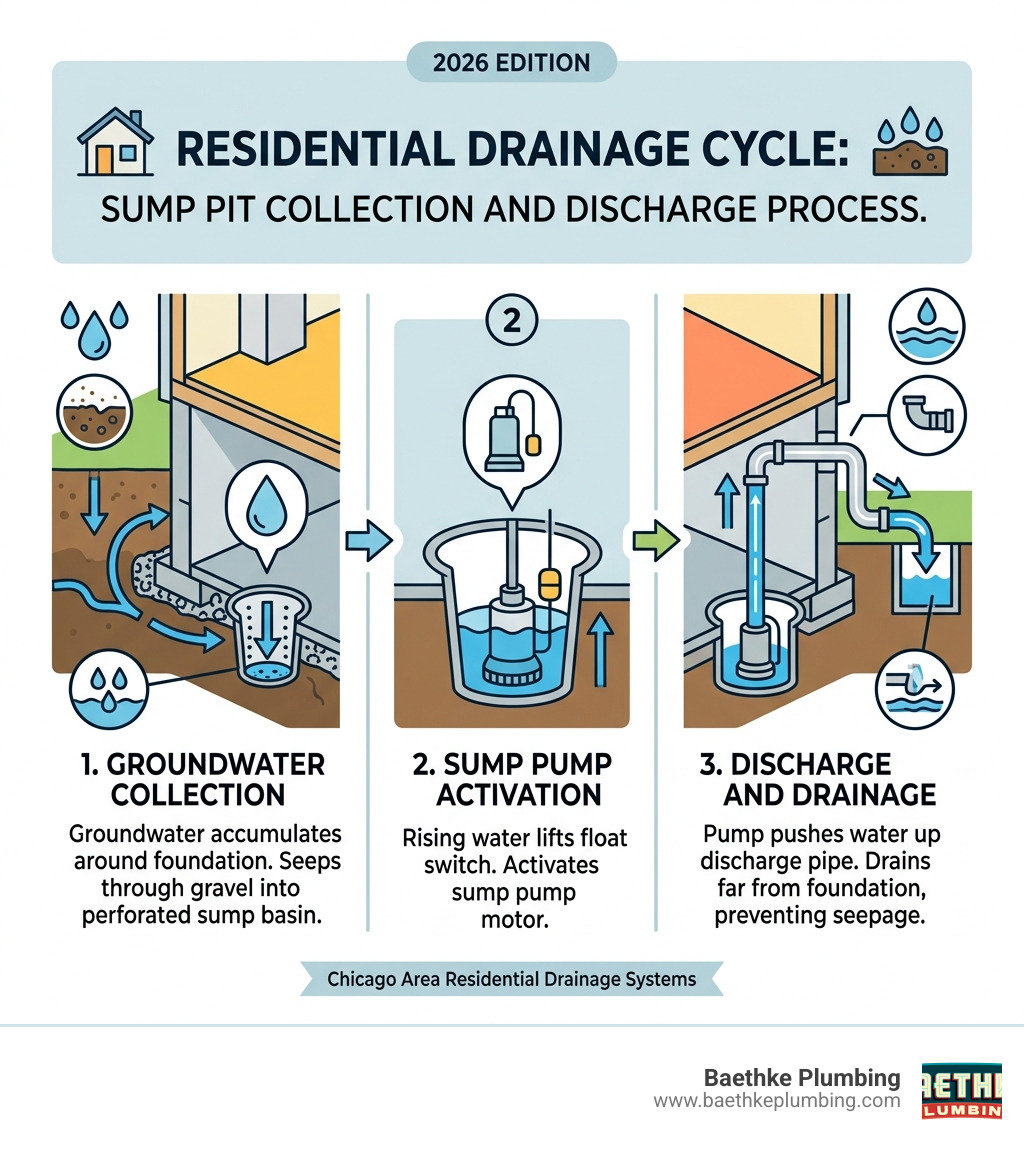
To understand why a dry sump pit remains empty, we first have to look at what it’s actually supposed to do. Think of the sump pit as the “drain of last resort” for your home’s foundation. It is a hole specifically dug at the lowest point of your basement or crawl space.
A proper sump setup usually includes a perforated basin, which is a plastic or metal liner with holes along the sides, placed on top of a gravel base. The gravel works like a simple filter. It lets groundwater flow into the pit while helping keep out larger debris and silt that can damage the pump impeller. When the water table rises, often after spring thaw or a strong storm, water collects in the pit. As the level climbs, it raises the float switch, starts the motor, and pushes water through the discharge pipe away from your foundation.
Why Your Sump Basin Design Matters
The design of your dry sump pit is critical. A basin that is too small will cause your pump to “short cycle,” turning on and off every few seconds, which burns out the motor. A basin that is too large might allow too much water to sit, creating humidity and musty odors.
Standard perforated liners are essential because they allow the pit to collect water from the soil underneath your floor, not just water that has already flooded onto the surface. This proactive collection is why many homeowners choose to protect their home with a sump pump even if they haven’t seen a flood yet. The right sizing ensures that even during peak rainfall, the system can handle the volume without being overworked.
Why Your Sump Pump Pit Stays Bone Dry During Heavy Rain
It can be eerie. The rain is lashing against the windows, the gutters are overflowing, and yet your dry sump pit looks like a desert. In most cases, this isn’t a failure of the pump—it’s a victory for your home’s exterior defenses.
Several factors contribute to a perpetually dry pit:
- Soil Composition: Chicago is famous for its “clout,” but its clay-heavy soil is a different story. Clay holds water but moves it slowly. If you live in an area with sandy soil, water drains away so quickly it never reaches the level of your sump basin.
- Site Grading: If your yard slopes steeply away from your house, the water is simply running off into the street or yard before it can soak down to the foundation.
- Waterproofing & French Drains: If you have high-quality exterior waterproofing or a functional French drain system, that water is being diverted elsewhere before it ever needs to enter your sump pit.
While you might worry about the lack of action, a dry pit often reflects the quality of your home’s construction. If you’re curious about the value of these systems, check out the sump pump installation cost Chicago 2026 to see how an investment in a dry basement pays off.
The Benefits of a Perpetually Dry Sump Pit
Having a dry sump pit is actually a massive win for your property value. Real estate experts suggest that a dry, waterproofed basement can provide a property value boost of up to 10%.
Beyond the money, there’s the health factor. A dry pit means lower humidity, which prevents the growth of mold and mildew. It also protects your structural integrity. When water sits against a foundation, it can cause cracks and shifting. A system that keeps the water away—or a site that naturally drains well—can lead to a 90% reduction in flood risk. You aren’t just “lucky”; you’re living in a well-protected fortress.
Building Codes and “Just in Case” Installations
“If it’s always dry, why do I even have one?” We hear this a lot in neighborhoods like Edison Park and Sauganash. The answer often comes down to municipal building codes. In many parts of Chicagoland, builders are required by law to install a sump system, regardless of whether the current water table is high or low.
Building codes are usually written for worst-case conditions. A property that stayed dry decades ago can face a higher water table today because of nearby construction, drainage changes, or shifting weather patterns. Having a sump pump is a lot like keeping a fire extinguisher in the house: you hope it never gets used, but you want it ready if conditions suddenly change.
Maintenance and Testing for a Rarely Used System
A dry sump pit presents a unique challenge: mechanical parts that don’t move tend to seize up over time. About 80% of sump pump failures are caused by neglect or lack of maintenance. If your pump hasn’t run in a year, you cannot assume it will work when the “Big One” hits.
Testing is simple. Take a garden hose or a few five-gallon buckets of water and slowly pour them into the basin. Watch the float switch—it should rise freely. Once it reaches the trigger point, the pump should hum to life and quickly evacuate the water. A healthy pump can move up to 2,000 gallons per hour (GPH). If it struggles with a single bucket, you have a problem.
For a full schedule, see how often do sump pumps need preventive maintenance. Also check the outdoor discharge pipe to make sure debris or animal nests are not blocking it and causing a backup.
Should You Manually Add Water to a Dry Sump Pit?
Yes, but not daily. We recommend manually adding water to your dry sump pit about once every few months if it stays perpetually dry. This serves two purposes:
- Lubrication: It keeps the seals and internal components of the pump lubricated.
- Vapor Trap: If your sump pit is connected to a floor drain, a little water in the bottom helps maintain a “trap” that prevents sewer gases from wafting into your basement.
Do not overdo it. You only need enough water to trigger one cycle, not add extra humidity to the basement. For more tips, read our guide on how to ensure home safety: a guide to sump pump maintenance.
Enhancing Reliability with Backup Systems
In Chicago, heavy storms often come with power outages. If your primary pump is electric and the power goes out, it doesn’t matter how dry your pit usually is—you are at risk.
Since many homeowners neglect their pumps, failures are common during the first big storm of the season. We strongly advise you to enhance your sump pump operations with a backup battery. These systems can provide 24-48 hours of runtime, ensuring that even if the grid goes down, your basement stays dry.
When a Dry Pit Indicates a Potential Problem
While a dry sump pit is usually a sign of good drainage, there are times when it’s a “false positive.” In other words, the pit is dry because the water can’t get in, not because the water isn’t there.
Common issues include:
- Clogged Inlet Pipes: The pipes that lead from your foundation’s weeping tile into the pit can become clogged with silt, roots, or debris.
- Improper Installation: If the basin was installed too high, the water might be saturating your foundation soil before it ever reaches the “lip” of the basin.
- Frozen Lines: In a cold Chicago winter, the discharge line can freeze. If water can’t get out, the system might eventually stop accepting water altogether.
Sump pumps usually last about 7 to 10 years. If yours is approaching that range, it may be time to review how to tell when your sump pump needs replacing.
Troubleshooting a Non-Responsive Pump
If you pour water into the pit and nothing happens, check the basics:
- Power: Is it plugged into a GFI outlet that has tripped?
- The Float: Is the float switch stuck against the side of the basin? (This is the #1 cause of “failures”).
- The Motor: Do you hear a hum but see no water moving? The impeller might be jammed.
If the motor is burned out or the electrical components have failed, it’s time for a professional assessment.
Signs of Hidden Water Intrusion
Sometimes the dry sump pit is a liar. If your pit is dry but you notice the following, you have a water problem that is bypassing your drainage system:
- Musty Odors: A tell-tale sign of mold growing behind drywall.
- Efflorescence: A white, powdery residue on concrete walls caused by mineral deposits left by evaporating water.
- Wall Cracks: Horizontal or stair-step cracks in your foundation.
- Damp Drywall: If the bottom of your finished basement walls feels soft.
If you notice these warning signs, your sump pit may not be working as it should. Read the complete guide to maintaining your sump pump to find out whether your drainage system needs attention.
Frequently Asked Questions about Dry Sump Pits
Is it normal for my sump pump to never run even during a storm?
Yes! If your home has excellent site grading (sloping away from the house), deep gutters, and sandy soil, the water may never reach the foundation level. In many Chicago neighborhoods, homeowners are simply “lucky” to have a naturally low water table.
How often should I test a pump that is always dry?
We recommend a “bucket test” every three months and a more thorough inspection every spring before the rainy season begins. Testing the float switch is the most important part of this process.
When should I call a professional to inspect my dry pit?
You should call us if you notice visible rust on the pump, hear strange grinding noises during a test, or if the pump is more than 10 years old. Also, if your basement feels damp despite a dry pit, an expert can determine if your weeping tiles are clogged.
Conclusion
At Baethke Plumbing, we’ve spent over 30 years helping Chicago families protect their most valuable asset: their homes. Whether you’re in Lincoln Park or Jefferson Park, a dry sump pit shouldn’t be a source of anxiety—it should be a point of pride in a well-maintained home.
However, “dry” doesn’t mean “done.” Regular testing and professional check-ups are the only way to ensure that your “last line of defense” is ready to go when the clouds open up. If you haven’t tested your pump recently, or if you’re worried about hidden moisture in your basement, give us a call. Our licensed professionals provide straightforward pricing and the expert care your home deserves.
Don’t wait for a flood to find out if your pump works. Contact our expert plumbers today to schedule a comprehensive sump pump inspection and enjoy the peace of mind that comes with a truly dry basement.


