


What Avondale Homeowners Need to Know About Water Heaters
If you need a water heater in Avondale, Chicago, here’s a quick summary of what you should know:
| Topic | Quick Answer |
|---|---|
| Best water heater type | Tankless (long-term savings) or gas tank (lower upfront cost) |
| Average replacement cost | $1800–$8,000 depending on type |
| Typical lifespan | 8–12 years (tank) / 20+ years (tankless) |
| Installation time | 4-8 hours for most jobs |
| Emergency response | Same-day or 24/7 service available |
| Permit required? | Yes. Chicago requires permits for water heater installation work |
| DIY recommended? | No. Gas and code risks make professional installation essential |
Avondale is a busy, densely packed Chicago neighborhood, and like most of the city, its homes run hard on hot water year-round. Chicago winters push water heaters to work harder than in warmer climates, and many Avondale homes have aging units sitting in drafty basements, quietly losing efficiency or inching toward failure.
A leaking or failed water heater isn’t just uncomfortable. It can flood a basement, spike your utility bills, or leave your household without hot water in the middle of a Chicago winter. Knowing when to act, and who to call, makes all the difference.
This guide walks you through everything: choosing the right system, spotting warning signs, understanding costs, and keeping your water heater running longer.
At Baethke Plumbing, our licensed team brings more than 30 years of experience to water heater installation, repair, and replacement across Avondale and the greater Chicago area. We specialize in modern solutions, from tankless systems to high-efficiency gas units, and we know exactly what Chicago homes demand from their plumbing.
Choosing a Water Heater in Avondale, Chicago
When the time comes to purchase a new water heater in Avondale, Chicago, you shouldn’t just buy the first unit you see on a home improvement store shelf. Chicago homes have unique demands. Between our freezing winters and older architectural layouts, choosing the right system requires balancing performance, installation space, fuel sources, and long-term energy savings.
Traditional storage tank heaters still hold a valuable place in many households, especially when the existing setup is reliable and the household’s hot water usage is predictable. If you are comparing that option with a tankless upgrade, our water heater services team can evaluate your space, fuel source, recovery-rate needs, and long-term efficiency goals before recommending a system.
If you are currently running a standard tank system but find yourself constantly running out of hot water during back-to-back morning showers, tankless technology may be worth considering. Tankless systems can be a strong fit for Avondale homes that need steady hot water without dedicating as much basement or utility-room space to a storage tank. Let’s look at how these options stack up for Avondale residential properties.
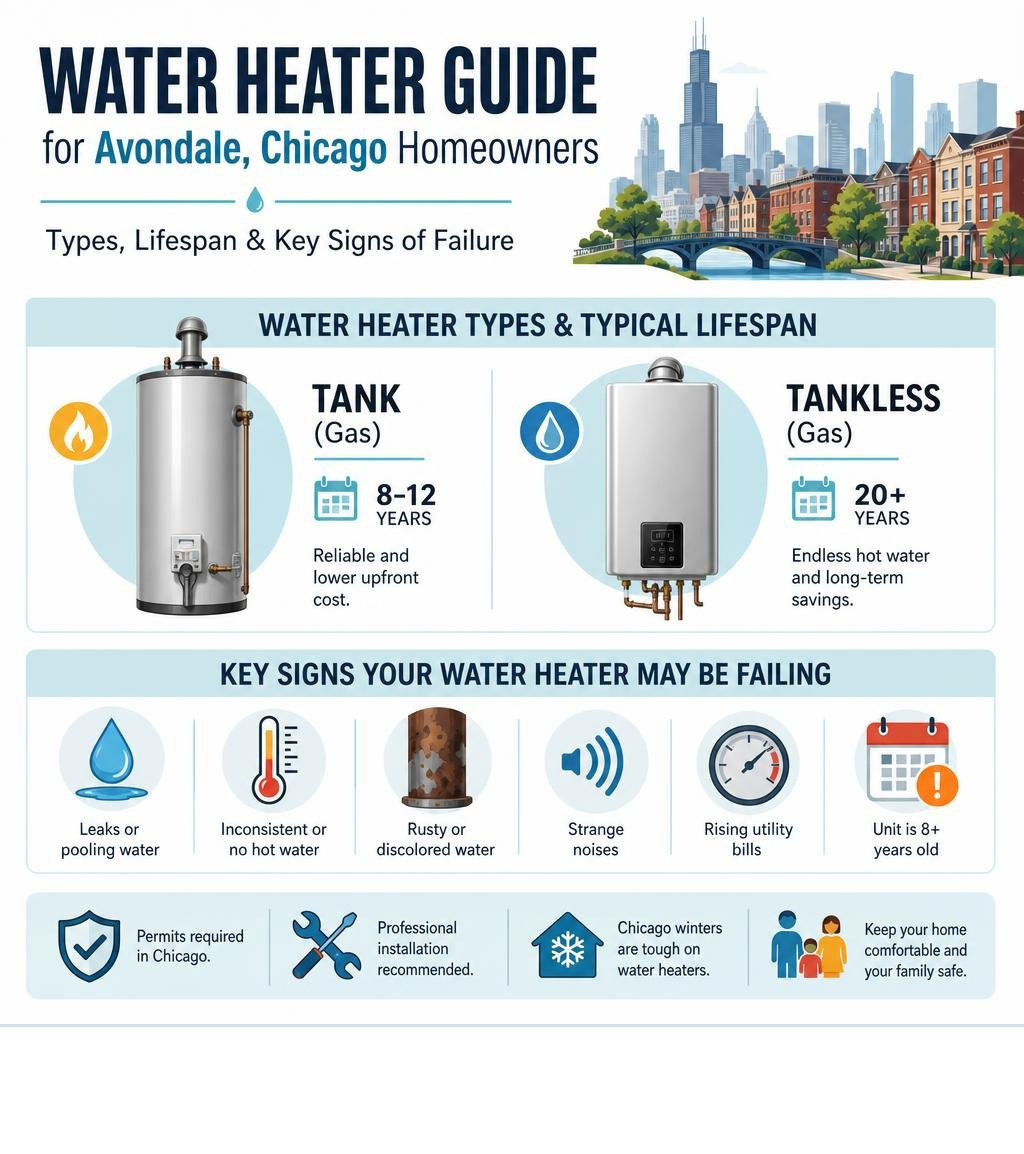
Traditional Tank vs. Tankless Water Heater Systems in Avondale, Chicago
Storage tank water heaters are the most common units found in Chicago basements. They work by keeping a set volume of water (usually 40 to 50 gallons) heated 24/7, ready for use. Tankless water heaters, on the other hand, operate on demand, heating water instantly as it flows through the unit.
Here is a straightforward comparison to help you weigh your options:
| Feature | Traditional Storage Tank | Tankless Water Heater |
|---|---|---|
| Average lifespan | 8 to 12 years | 20+ years |
| Energy efficiency | Standard (continuous standby energy loss) | High (24% to 34% more energy-efficient) |
| Hot water supply | Finite (runs out when tank is empty) | Endless (heated on demand) |
| Upfront cost | Lower ($1,800 – $5,000 average) | Higher ($5,000 – $10,000+ average) |
| Space required | Large footprint (requires a dedicated closet or basement corner) | Compact (wall-mounted, saving valuable floor space) |
| Maintenance needs | Annual tank flush, anode rod check | Regular scale flushing (especially in hard water areas) |
Because each home uses hot water differently, the best choice depends on household size, peak shower and appliance demand, and the condition of your current plumbing. A storage tank can be practical for lower upfront costs, while a tankless system may make more sense when efficiency, longer lifespan, and space savings matter most.
Gas vs. Electric Water Heater Options
In Avondale, the choice between gas and electric units is usually determined by your home’s existing utility hookups. However, if you have the option to choose, it’s helpful to understand how they impact your monthly utility bills.
- Gas water heaters: These are highly popular in Chicago because natural gas is widely available and typically cheaper than electricity for heating. Gas water heaters can save homeowners around $100 per year compared to electric models. They also have a faster recovery rate, meaning they can heat a cold tank of water much quicker than electric elements.
- Electric water heaters: Electric units are often simpler and cheaper to install initially because they do not require complex gas lines or exhaust venting systems. They are incredibly safe and highly efficient at transferring heat directly to the water. However, because electricity rates can be higher, their monthly operating costs are often slightly higher than gas.
Understanding these foundational differences is key to making an informed investment, especially in older Chicago properties where venting, utility access, and basement layout can affect what is practical.
Signs You Need Water Heater Repair or Replacement
No one wants to wake up to an icy-cold shower on a windy January morning. Fortunately, your water heater rarely fails without warning. By keeping an eye out for early warning signs, you can schedule repairs or arrange a water heater replacement before a minor issue turns into a basement flood.
If you aren’t sure whether your unit is on its last legs, look for these common indicators:
- Fluctuating water temperatures: If your water goes from hot to freezing cold in minutes, your heating elements (electric) or burner assembly (gas) may be failing.
- Rusty or discolored water: Rusty water coming from your hot taps suggests that your water heater’s internal lining is corroding. If the rust only appears when the hot water is running, the tank is likely deteriorating.
- Strange noises: Popping, rumbling, or banging noises coming from your basement are not ghosts. It is the sound of boiling water trapped under a thick layer of sediment at the bottom of your tank.
- Water pooling around the base: If you notice damp spots, moisture, or active pooling water around the bottom of your tank, it is a sign of a structural fracture. A leaking tank cannot be repaired; it must be replaced.
- Age of the unit: Most traditional storage tank water heaters will need to be replaced after 10 to 15 years. If your unit is over a decade old, replacing it proactively can save you from emergency cleanups.
If you are trying to decide whether to call for a quick fix or prepare for a brand-new system, pay attention to how often problems return after repairs. Repeated pilot light issues, persistent rusty hot water, and recurring temperature swings often mean water heater replacement is the safer long-term option.
Common Water Heater Issues in Avondale Basements
Avondale features a beautiful mix of historic brick bungalows, two-flats, and modern builds. However, older homes often have drafty, uninsulated basements. These environments introduce specific plumbing challenges.
Drafts can easily blow out the pilot light on older, standard-vent gas water heaters, leaving you without hot water. Older basement layouts can also make venting, clearance, and replacement access more complicated, which is why professional evaluation matters before choosing a new system.
Additionally, Chicago’s municipal water contains minerals that can lead to rapid scale buildup. This hard water accelerates sediment accumulation, which coats heating elements and reduces system efficiency. In tankless systems, scale can also restrict narrow heat exchanger passages, reducing performance and triggering error codes.
Emergency Water Heater Repair and Replacement in Avondale, Chicago
A leaking water heater is a true plumbing emergency. Because Chicago has a combined storm and sanitary sewer system, basement flooding can quickly escalate. If a water heater tank ruptures, it can dump dozens of gallons of water directly onto your basement floor, damaging storage, drywall, and mechanical systems.
When a sudden failure occurs, you need a team that can respond immediately. Baethke Plumbing provides rapid emergency response services across Avondale to isolate leaks, drain failing tanks, and perform fast, same-day replacements to protect your home.
Cost, Codes, and Professional Installation in Avondale
We believe in straightforward, transparent pricing. When planning a water heater service, it is helpful to understand what goes into the overall cost.
Financing and Warranties for New Systems
A new water heater is an investment in your home’s infrastructure. To help make this purchase manageable, we offer flexible financing and payment options.
Additionally, new installations come with robust protections. Depending on the brand and model you choose, manufacturer warranties can range from 6 to 12 years on the tank itself. We also back our work with solid labor guarantees to give you complete peace of mind. Before you hire a contractor, compare warranty coverage, permit handling, disposal, and the installer’s experience with Chicago homes.
Chicago Plumbing Codes and Safety Standards
Chicago has strict plumbing and building codes designed to keep residents safe. These codes cover crucial safety requirements, including:
- Proper venting: Gas water heaters must vent combustion gases safely outside. Incorrect venting can lead to carbon monoxide backdrafting into your home.
- Expansion tanks: Chicago code often requires thermal expansion tanks to prevent dangerous pressure spikes within your plumbing system.
- Drop legs and safety valves: Properly installed temperature and pressure (T&P) relief valves are mandatory to prevent tank explosions.
Local code requirements can affect both safety and project scope. Chicago homeowners should expect the installation team to check venting, combustion air, shutoff valves, expansion control, and T&P discharge piping before the job is complete.
Why Professional Installation Beats DIY
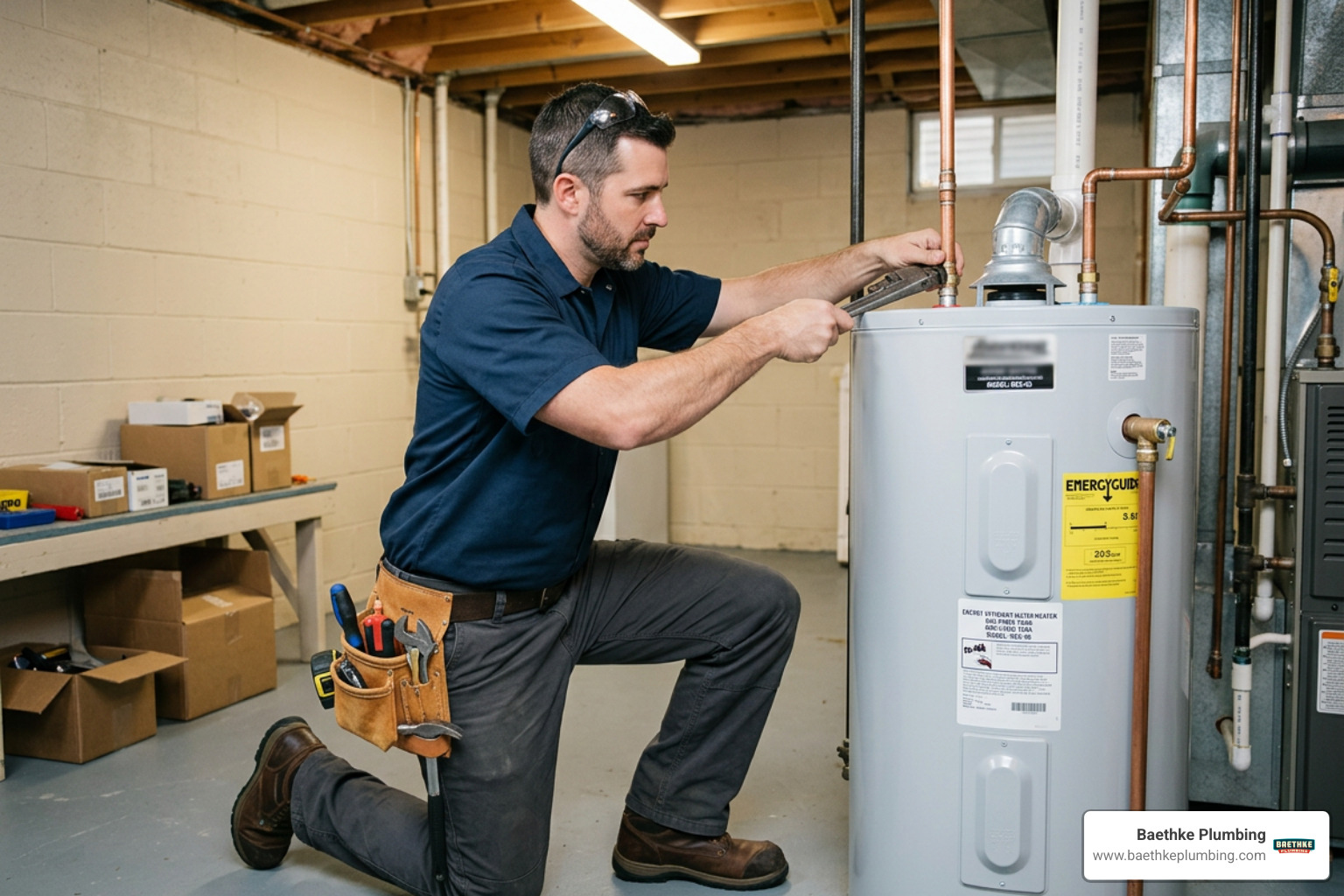
While DIY projects can be rewarding, water heater installation is not the place to cut corners. Working with water heaters involves high-voltage electricity, natural gas lines, and high-pressure water systems.
A single mistake can lead to gas leaks, carbon monoxide exposure, water damage, or a voided manufacturer warranty. Licensed plumbers ensure that the work is fully code-compliant, safe, and eligible for all warranty protections.
Maintenance Tips to Extend Your Water Heater’s Lifespan
With proper care, you can easily maximize the lifespan of your water heater. Routine maintenance keeps your utility bills low and prevents premature system failure.
We recommend following this simple annual checklist:
- Flush the tank: Drain your water heater annually to clear out sediment.
- Test the T&P valve: Lift the lever on the temperature and pressure relief valve to ensure water flows freely and shuts off completely.
- Inspect the anode rod: This sacrificial rod attracts corrosive elements to protect your tank. If it is completely degraded, replace it immediately to prevent tank rust.
Annual maintenance is especially important in Chicago because mineral buildup, basement humidity, and heavy winter use can shorten equipment life. Flushing the tank, checking safety valves, and watching for early signs of corrosion help reduce surprise breakdowns before they become urgent repairs.
Hard Water and Sediment Management
Because Chicago’s water contains significant mineral content, sediment management is vital. If you own a tankless system, mineral scale can quickly clog the narrow heat exchanger passages, reducing efficiency and triggering system errors.
Regularly flushing your system with a descaling solution is the best way to maintain peak performance. The right maintenance schedule depends on water hardness, system type, and household usage, so Avondale homeowners with recurring sediment problems should have a licensed plumber inspect the system before efficiency drops.
Frequently Asked Questions About Water Heaters in Avondale
How long does a water heater last in Chicago?
On average, a traditional storage tank water heater in Chicago lasts 8 to 12 years. Tankless models can last over 20 years with consistent maintenance. Our freezing winters force systems to work harder to heat freezing municipal water, which can accelerate wear and tear.
What is the average cost of water heater replacement in Avondale?
A standard gas storage tank replacement typically costs between $1,800 and $5,000, including labor, permit fees, and disposal of your old unit. Tankless installations can cost more upfront due to retrofitting gas lines and venting.
How do I choose the right size water heater for my home?
Sizing depends on your household’s peak water usage. For storage tanks, a household of 1 to 2 people typically needs a 40-gallon tank, while 3 to 5 people usually require a 50-gallon tank. For tankless units, sizing is based on flow rate (gallons per minute).
Conclusion
At Baethke Plumbing, we have provided premium residential and commercial plumbing services across Chicagoland for more than three decades. Whether you live in Avondale, Irving Park, Logan Square, or Lincoln Park, our team of licensed, background-checked plumbers is dedicated to delivering professional workmanship and straightforward pricing.
If you are dealing with a failing water heater, high utility bills, or simply want to explore energy-efficient upgrades, we are here to help. Our team is always available to provide expert advice and reliable service to keep your home running smoothly.
Ready to restore your home’s hot water? Contact our professional water heater technicians to schedule an inspection or request a detailed estimate for your new installation.


