


When a Pipe Bursts at Home, Every Second Counts
Knowing burst pipe what to do can be the difference between a $500 repair and a $50,000 disaster. Here’s what to do right now:
If a pipe just burst in your home, take these steps immediately:
- Shut off the main water supply: turn the valve clockwise to stop water flow
- Turn off electricity to any affected areas at the circuit breaker
- Open all faucets to drain pressure from the lines
- Move valuables away from standing water
- Call a licensed emergency plumber
- Document the damage with photos and video before cleaning up
- Contact your homeowners insurance provider to start a claim
A burst pipe can release 5-20 gallons of water per minute. That means hundreds of gallons can pour into your home before a plumber arrives. Floors, walls, ceilings, and electrical systems can all be damaged fast. And if moisture isn’t dried out within 24 to 48 hours, mold can begin to grow.
The first 10 minutes are the most critical window you have to limit that damage.
At Baethke Plumbing, we’ve responded to burst pipe emergencies across Chicago for decades. We’ve seen how fast they escalate and exactly what to do to keep the damage from getting worse. This guide walks you through every step.
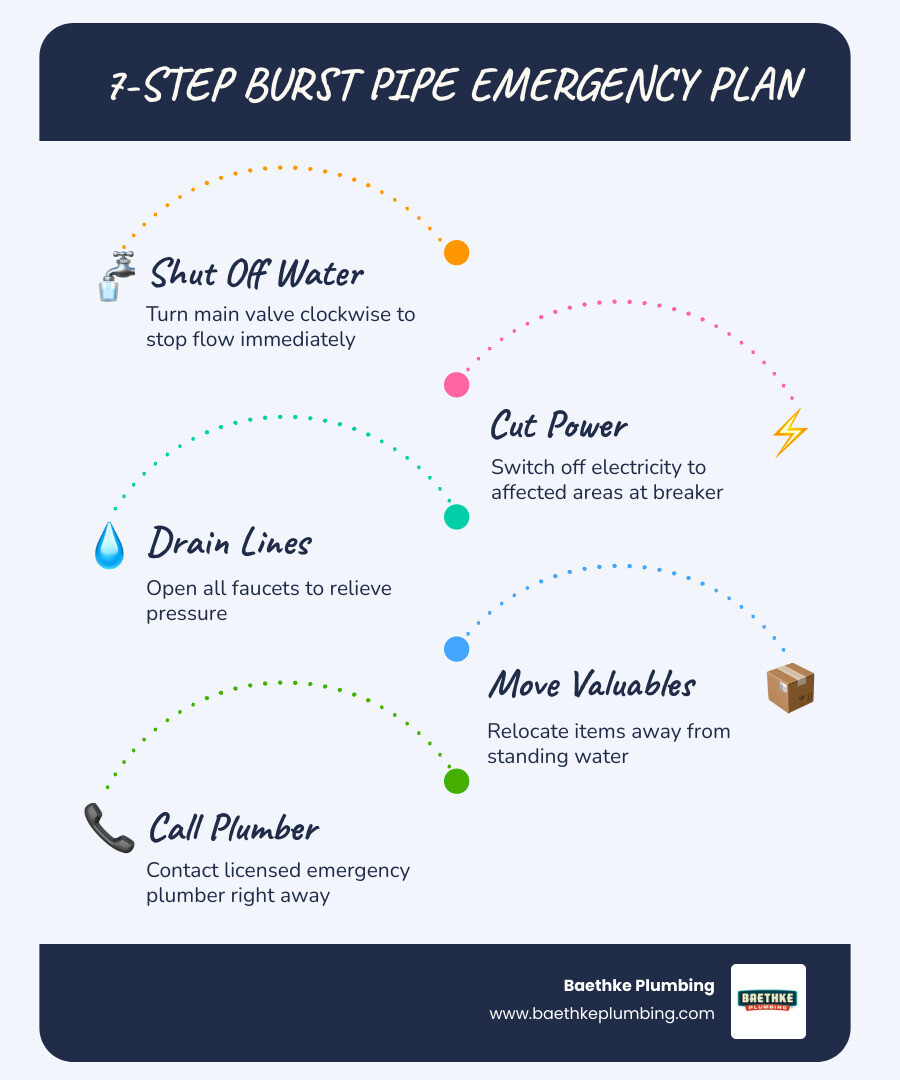
The 10-Minute Emergency Action Plan: Burst Pipe What to Do
When water is spraying from a wall or pooling rapidly across your hardwood floors, panic is your worst enemy. To prevent a bad situation from turning into a total property loss, you need to execute a clear, systematic plan. Think of this as your home’s emergency triage.
Following a structured approach helps you regain control of the situation before the water can compromise your home’s structural foundation. Let’s break down the immediate physical actions you must take within the first ten minutes of discovering a leak.
Step 1: Shut Off the Main Water Supply Immediately
The absolute first priority is to cut off the water at its source. Do not waste time trying to find the exact hole in the pipe or cleaning up puddles yet.
Your main water shut-off valve controls all the water entering your home.
- Where to find it: In most Chicagoland homes, especially those in older neighborhoods like Lincoln Square, Logan Square, or Ravenswood, the shut-off valve is located in the basement or crawl space. Look on the wall closest to the street, where the main water line enters through the foundation. In slab-on-grade homes or townhomes, you’ll often find it in a utility closet, the garage, or directly under the kitchen or laundry sink.
- How to turn it off: If you have a gate valve (a round dial that looks like a hose spigot), turn it clockwise (righty-tighty) until it cannot turn any further. If you have a modern ball valve (a straight lever handle), pull the lever a quarter-turn so it is perpendicular to the pipe.
If you cannot find your indoor valve, you may need to locate the outdoor water meter box near the street curb, though this typically requires a special pentagon-shaped curb key to open and turn off.
Step 2: Cut the Power Safely
Water and electricity are a lethal combination. If the burst pipe is leaking near electrical outlets, light fixtures, appliances, or your main breaker panel, do not step into the water.
Go straight to your electrical panel (circuit breaker) and shut off the power to the affected zones of the house. If water is actively dripping onto the breaker panel itself, do not touch it. Evacuate the home immediately and call emergency services. Your safety is infinitely more valuable than dry drywall.
Step 3: Drain the Lines and Relieve Pressure
Once the main water valve is completely closed, there is still a significant amount of pressurized water sitting inside your home’s plumbing lines. If you don’t drain this water, it will continue to leak out of the burst section.
Go to the lowest level of your home (usually the basement or a first-floor utility sink) and turn on the cold and hot water taps completely. Then, go to the highest level of your home and open those faucets as well. Draining the system from the bottom up allows gravity to pull the remaining water safely down through your drains rather than letting it escape through the broken pipe. Additionally, flush all toilets to empty their tanks.
Crucial Tip: Turn off your water heater. If your water lines drain dry while your water heater (gas or electric) is still running, it can cause severe dry-fire damage to the heating elements or tank, resulting in another expensive replacement.
Recognizing the Warning Signs of a Hidden Pipe Burst
Not every pipe burst is a dramatic, roaring geyser. In fact, some of the most destructive pipe failures occur silently behind drywall, under floorboards, or beneath concrete slabs. These slow, hidden bursts can leak hundreds of gallons of water over several days before showing obvious signs.
To catch these issues early, you need to conduct regular checks. We recommend reviewing these signs of household water damage to help identify hidden system failures before they rot your subfloors.
Key warning signs of a hidden pipe burst include:
- Sudden Drop in Water Pressure: If your shower or kitchen faucet suddenly feels like a sad trickle, water is likely escaping from a major break elsewhere in the line.
- Unusual Water Sounds: If you hear hissing, whistling, bubbling, or the sound of rushing water behind your walls when no appliances or faucets are running, a pipe has likely failed.
- Spike in Your Water Bill: An unexplained jump in your monthly utility bill is a classic sign of a continuous hidden leak.
- Water Discoloration and Odors: If your tap water suddenly looks rusty, brown, or smells metallic, it may indicate a corroded or ruptured pipe that is pulling sediment from surrounding structural cavities.
How to Spot a Burst Pipe: What to Do When Leaks Are Hidden
If you suspect you have a leak but don’t see standing water, you need to act as a detective. Start by checking your water meter. Turn off every single faucet and water-consuming appliance in your house, then look at the low-flow indicator on your meter (often a small red or blue triangle or dial). If that dial is spinning, water is leaving your system.
For a deeper look, check out our guide to leak detection, which covers the specific diagnostic indicators you can use to pinpoint hidden water movement.
If you are trying to narrow down the location, look for damp patches on your ceilings, bubbling wallpaper, or warped baseboards. You can also utilize a cheap moisture meter from a local hardware store to test drywall surfaces. If you want to dive deeper into proactive water conservation, read our advice on saving water by detecting and fixing leaks.
The True Cost of Delay: Water Damage and Mold Timelines
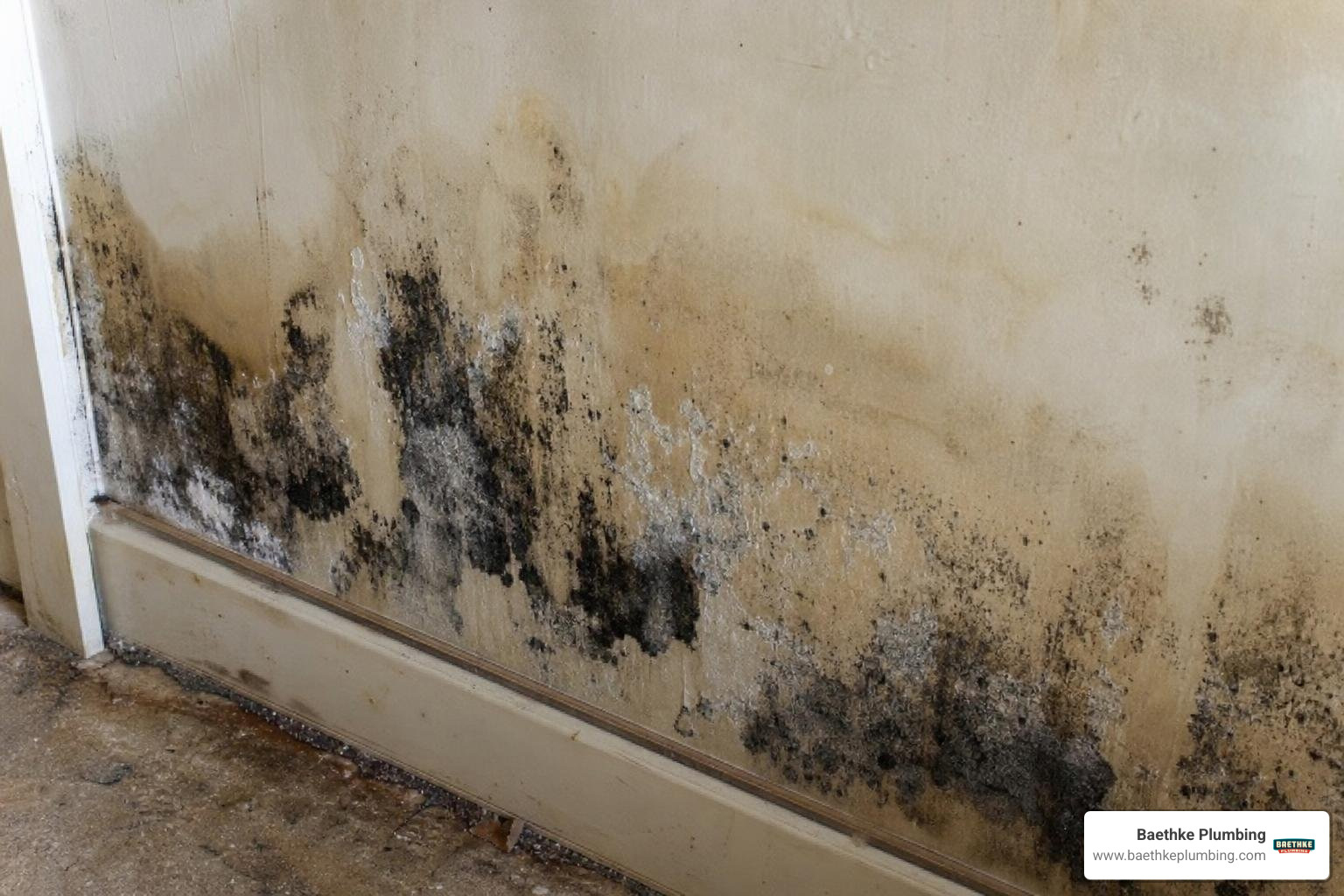
Time is the single most critical factor when dealing with water damage. A burst pipe is not a problem that can wait until the weekend or even the next morning.
To put this into perspective, water damage from a burst pipe can get expensive fast. Repair costs vary widely based on how much water escaped, where it spread, and how long it sat. If moisture lingers for more than a few hours, the damage can quickly become much more serious.
Here is what happens to your home on a strict, unforgiving timeline:
| Time Elapsed | Damage Occurring |
|---|---|
| Within Minutes | Water spreads rapidly, saturating carpets, upholstery, drywall, and structural wood. Wood furniture can stain carpets permanently. |
| 1 to 24 Hours | Drywall begins to swell and break apart. Hardwood floors warp and buckle. Metal surfaces start to tarnish, and musty odors fill the home. |
| 24 to 48 Hours | Mold can begin growing on water-saturated building materials. Drywall structural integrity fails completely. |
| Over 48 Hours | Mold spore counts spike, creating severe health hazards. Structural wood begins to rot, and biological allergens contaminate the air. |
Mold Prevention After a Burst Pipe: What to Do to Protect Your Health
Because mold begins to propagate at relative humidity levels above 60% in water-saturated environments, you must begin the drying-out process immediately after the plumbing repair is complete.
Simply opening a window or running a standard household box fan will not suffice. To properly remediate the area:
- Extract Standing Water: Use a heavy-duty wet/dry vacuum to pull as much water out of carpet fibers and off hard floors as possible.
- Deploy Dehumidifiers: Rent or purchase commercial-grade refrigerant dehumidifiers. Place them directly in the affected rooms to pull moisture out of the air and dry out the deep pores of plaster, wood, and drywall.
- Use High-Velocity Air Movers: These industrial-strength fans force high-velocity air across wet surfaces, accelerating evaporation.
- Discard Wet Insulation: Fiberglass and cellulose insulation lose their R-value when wet and act as a sponge for mold. They must be cut out and discarded.
Navigating Homeowners Insurance and Documenting Damage
Dealing with the aftermath of a burst pipe is stressful, but understanding how your homeowners insurance works can save you from paying thousands of dollars out of pocket.
Generally speaking, standard homeowners insurance policies cover water damage if it is “sudden and accidental.” A pipe freezing and bursting on a cold night in Bucktown or Logan Square is a prime example of a covered event. However, if the pipe burst because of neglect, such as leaving your home completely unheated during a freezing winter trip or ignoring a slow, visible leak for six months, your claim will likely be denied.
Step-by-Step Insurance Documentation
Before you throw away damaged items or allow a restoration crew to tear out drywall, you must document the scene thoroughly. Your insurance adjuster needs hard evidence to validate your claim.
- Take Photos and Videos: Capture wide shots of the flooded rooms and close-up shots of the damaged pipe, ruined furniture, warped flooring, and stained walls. Take videos explaining the extent of the damage.
- Keep Every Receipt: Save all receipts from your emergency plumber, water extraction rentals, and any temporary housing or food costs if your home is uninhabitable.
- Consult Restoration Services: For extensive flooding, work with a professional water mitigation company to get a formal, itemized assessment of the structural drying process. Having a professional moisture-reading log is incredibly helpful during insurance negotiations.
Prevention and Maintenance: Keeping Your Pipes Safe
The best way to handle a burst pipe is to prevent it from happening in the first place. In Chicagoland, harsh winters are the biggest trigger for plumbing failures. When water freezes inside a pipe, it expands by about 9%. That expansion creates intense pressure, often exceeding 3,000 PSI, which can split copper, PEX, and PVC pipes.
To safeguard your home, we highly recommend reading our guide on how to prevent your pipes from freezing.
Additionally, keeping up with regular plumbing health checks is vital. Incorporating plumbing preventative maintenance into your annual home care routine ensures that weak joints, high water pressure, and minor corrosion are addressed before they turn into major emergencies.
Winterizing Your Plumbing System
When temperatures are projected to drop below 20°F, pipes can freeze in as little as 6 to 8 hours. Take these preventative actions immediately:
- Insulate Exposed Pipes: Wrap foam pipe insulation sleeve or fiberglass wrap around pipes located in unheated crawlspaces, basements, and attics.
- Disconnect Outdoor Hoses: Always disconnect garden hoses in the autumn. If left attached, water trapped inside the hose will freeze and expand back into the spigot, bursting the pipe inside your wall.
- Drip Your Faucets: Let a faucet furthest from your main water line drip slowly (about 5–10 drops per minute). Moving water is much harder to freeze, and an open tap relieves the pressure build-up if ice does begin to form.
- Keep Cabinet Doors Open: Open vanity and kitchen cabinet doors to allow warm ambient home air to circulate around the pipes beneath your sinks.
- Maintain Home Heating: Never set your thermostat lower than 55°F, even when traveling.
If you suspect your pipes are already starting to freeze (e.g., no water is coming out of the tap during a cold snap), follow our expert advice on what to do if pipes freeze to thaw them safely without causing a rupture.
Frequently Asked Questions About Burst Pipes
Can I temporarily fix a burst pipe myself?
While there are temporary DIY fixes like pipe repair clamps, rubber patches, or silicone tape, these are strictly emergency stopgaps designed to last a few hours until a professional arrives. They should never be treated as permanent repairs.
These temporary fixes only work on straight, smooth sections of pipe. If the burst occurred at a joint, elbow, or bend, a clamp will not seal the leak. Relying on a DIY patch long-term is highly risky; the pressure in a residential water line (typically 40–80 PSI) can easily blow a temporary patch off, causing a second, unexpected flood.
How long does it take for pipes to freeze and burst?
Pipes can freeze in as little as 6 to 8 hours when the outdoor temperature drops below 20°F, particularly if the pipes are located in uninsulated exterior walls or drafty crawlspaces.
However, the actual burst often doesn’t happen until the pipe begins to thaw. As the ice plug melts, water rushes into the damaged, split section of the pipe, causing immediate flooding.
When should I call an emergency plumber?
You should call an emergency plumber the moment you realize you cannot locate or stop a leak, or if the burst occurs on a main water supply line.
If you are unsure whether your situation is a true emergency, review the signs that call for immediate plumbing help. It is also worth understanding how an emergency plumber can protect your home from water damage, safety risks, and more expensive repairs.
Conclusion
A burst pipe is one of the most stressful events a homeowner can face. But if you stay calm and take the first steps, including shutting off the water, cutting the power, and draining the lines, you can help protect your home from serious damage.
Once you have stabilized the emergency, it is time to bring in the professionals. At Baethke Plumbing, we have spent over 30 years providing top-tier, customer-first plumbing services throughout Chicago and nearby neighborhoods, including Edison Park, Evanston, Lake View, and Logan Square.
Whether you need immediate emergency repairs, a whole-home repipe, or proactive winterization, our licensed, highly trained plumbing experts are here to help. Contact our specialists today to schedule our professional residential plumbing services and restore peace of mind to your home.